

A study for children and adolescents with hypochondroplasia

The ACCEL clinical program includes multiple studies grounded in learning more about hypochondroplasia and evaluating an oral treatment option for children and adolescents with this type of skeletal dysplasia.

smiling toddler with hypochondroplasia wearing a blue shirt

What is the purpose
of the ACCEL clinical program?

What will be measured
in ACCEL?

The first phase of the ACCEL clinical program is an observational study. Children and adolescents participating in this phase will not receive any medication. Specific measurements will be taken by a healthcare provider over a period of up to 2 years.5

Participants are required to complete at least 6 months in the ACCEL observational study to be eligible to move on to Phase 2 or Phase 3, in which eligible participants may receive an oral medication called infigratinib. Infigratinib is being studied for its ability to help bones grow in children and adolescents with HCH.3

All eligible children and adolescents who participate in Phase 2 or Phase 3 will have the option to receive infigratinib at some point, including those who receive placebo in Phase 3.
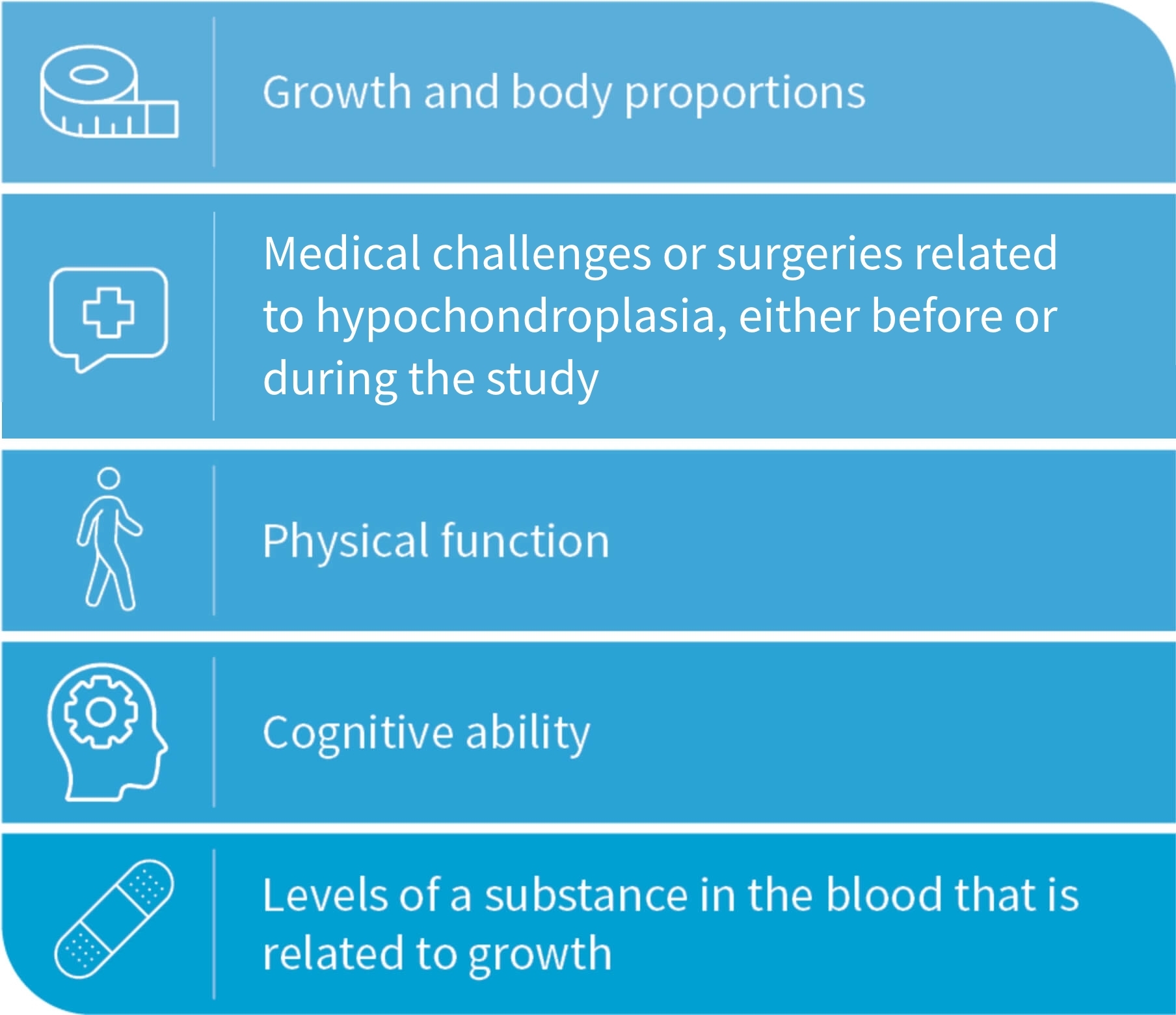
What will be measured
in ACCEL?

Overview of the ACCEL studies

The measurements collected in ACCEL will lead to a better understanding of the growth, physical characteristics, thinking ability, and possible medical challenges that people with HCH can experience.

Children and adolescents must participate in the ACCEL observational trial for 6 months or longer to be eligible for participation in the Phase 2 or Phase 3 studies.
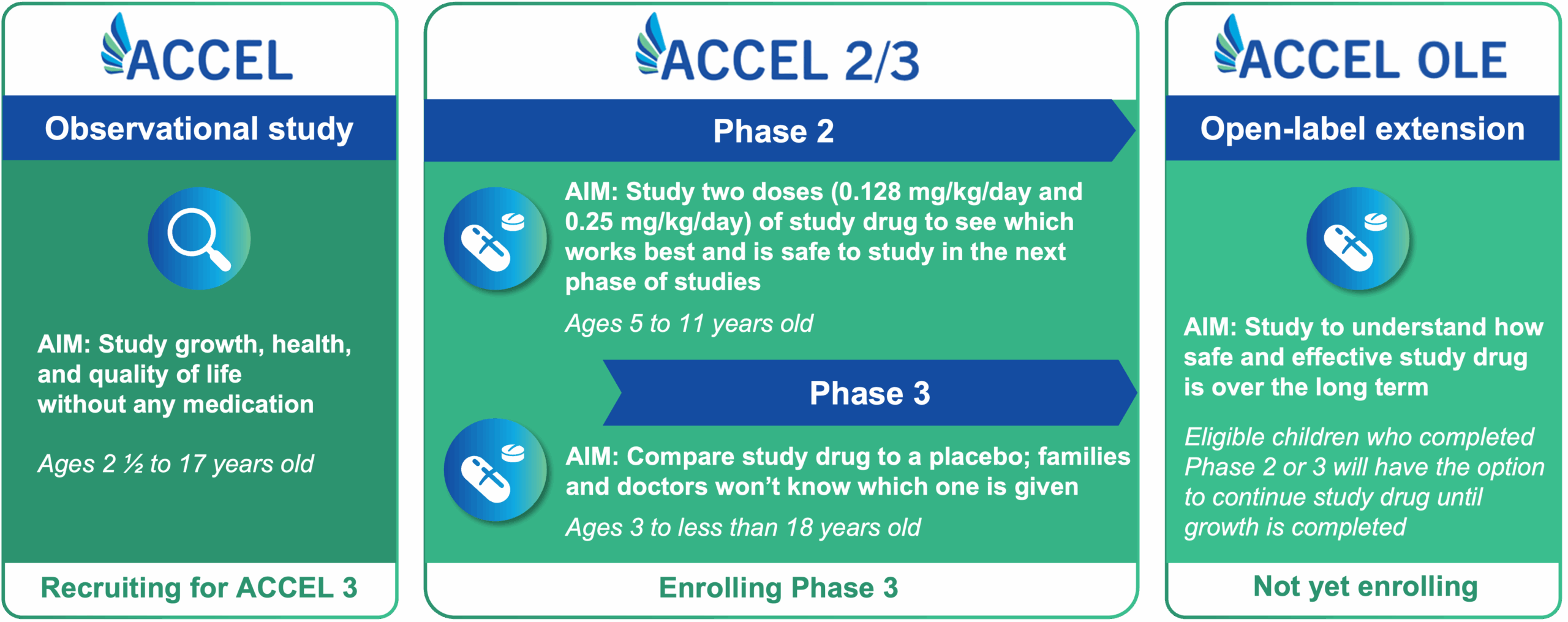
Infographic showing the ACCEL clinical study phases. First panel: Observational study — studies growth, health, and quality of life without medication for children ages 2½ to 17; currently recruiting. Second panel: ACCEL 2/3 — Phase 2 tests two doses of the study drug for safety and effectiveness in children ages 5 to 11. Phase 3 compares the study drug to a placebo for ages 3 to under 18; currently enrolling. Third panel: ACCEL OLE (Open-label extension) — studies long-term safety and effectiveness; eligible children from Phases 2 or 3 may continue treatment until growth is complete; not yet enrolling. Infographic showing the ACCEL clinical study phases. First panel: Observational study — studies growth, health, and quality of life without medication for children ages 2½ to 17; currently recruiting. Second panel: ACCEL 2/3 — Phase 2 tests two doses of the study drug for safety and effectiveness in children ages 5 to 11. Phase 3 compares the study drug to a placebo for ages 3 to under 18; currently enrolling. Third panel: ACCEL OLE (Open-label extension) — studies long-term safety and effectiveness; eligible children from Phases 2 or 3 may continue treatment until growth is complete; not yet enrolling.

Who can participate in ACCEL?

icon depicting a group of people arranged in three rows, representing children and adolescents eligible to participate in the ACCEL study

Children and adolescents ages 2.5 to less than 17 years (at the start of the study) with a diagnosis of HCH confirmed by genetic testing

icon of a globe symbolizing the geographic locations where ACCEL study visits may take place

For a complete list of the requirements to participate in the study, and the locations where study visits can take place, click here.

smiling parents holding their child

References